



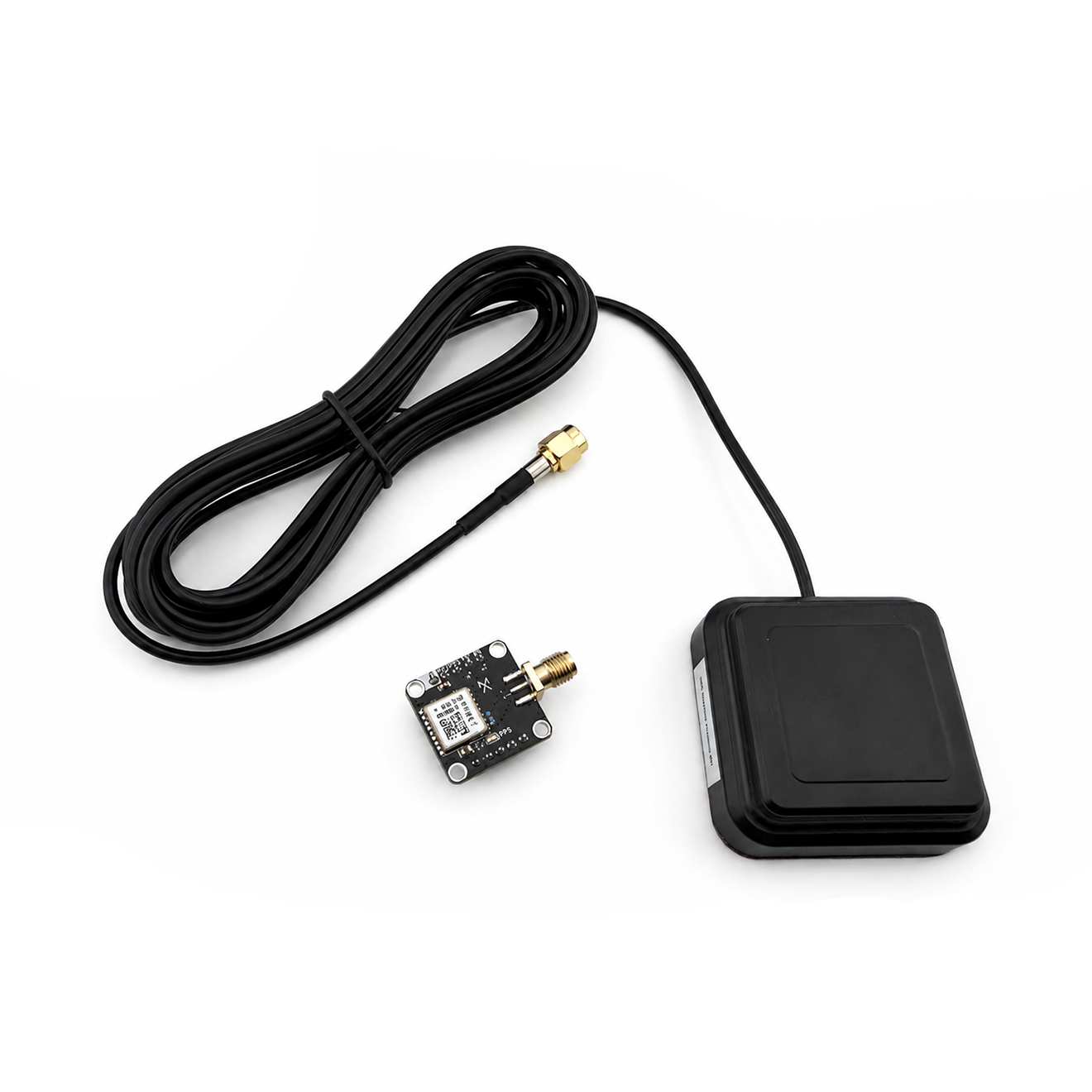
An SMA connector on the edge takes an external antenna, which does most of the work. GPS signals are faint and line-of-sight, so walls and roofs block them, meaning indoors you'll get a slow, drifting fix or none at all.


Technical Details
Pinout
Technical Resources
GNSS/GPS Sensor (ATGM336H-6N-74) - (AX22-0058)

PCB FRONT

PCB BACK
🖱️ Click & drag to rotate
Arduino Example Snippet
#include <HardwareSerial.h>
#include <TinyGPSPlus.h>

HardwareSerial GPS(1);
TinyGPSPlus gps;

volatile bool ppsFired = false;

void IRAM_ATTR onPPS() {
  ppsFired = true;
}

void setup() {
  Serial.begin(115200);
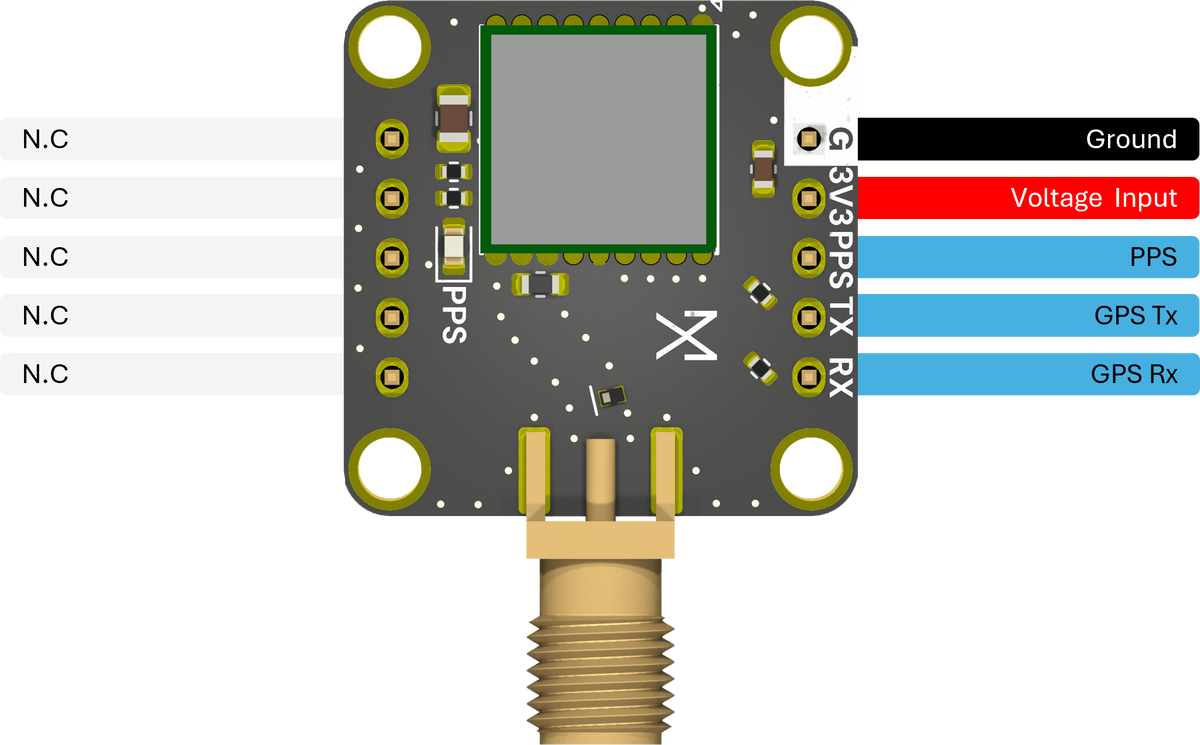
  GPS.begin(9600, SERIAL_8N1, P1_IO1, P1_IO2);
  pinMode(P1_IO0, INPUT);
  attachInterrupt(digitalPinToInterrupt(P1_IO0), onPPS, RISING);
  Serial.println("GNSS receiver started — waiting for fix...");
}

void loop() {
  while (GPS.available()) {
    gps.encode(GPS.read());
  }

  if (ppsFired) {
    ppsFired = false;

    if (gps.location.isValid()) {
      Serial.print("PPS | Lat: ");
      Serial.print(gps.location.lat(), 6);
      Serial.print("  Lon: ");
      Serial.print(gps.location.lng(), 6);
      Serial.print("  Alt: ");
      Serial.print(gps.altitude.meters(), 1);
      Serial.print("m  Sats: ");
      Serial.print(gps.satellites.value());
      Serial.print("  UTC: ");
      if (gps.time.isValid()) {
        char t[9];
        snprintf(t, sizeof(t), "%02d:%02d:%02d",
                 gps.time.hour(), gps.time.minute(), gps.time.second());
        Serial.print(t);
      } else {
        Serial.print("--:--:--");
      }
      Serial.println();
    } else {
      Serial.print("PPS | No fix yet — satellites seen: ");
      Serial.println(gps.satellites.isValid() ? gps.satellites.value() : 0);
    }
  }
}