



Technical Details

Pinout

Technical Resources
Servo Adapter - (AX22-0031)

PCB FRONT

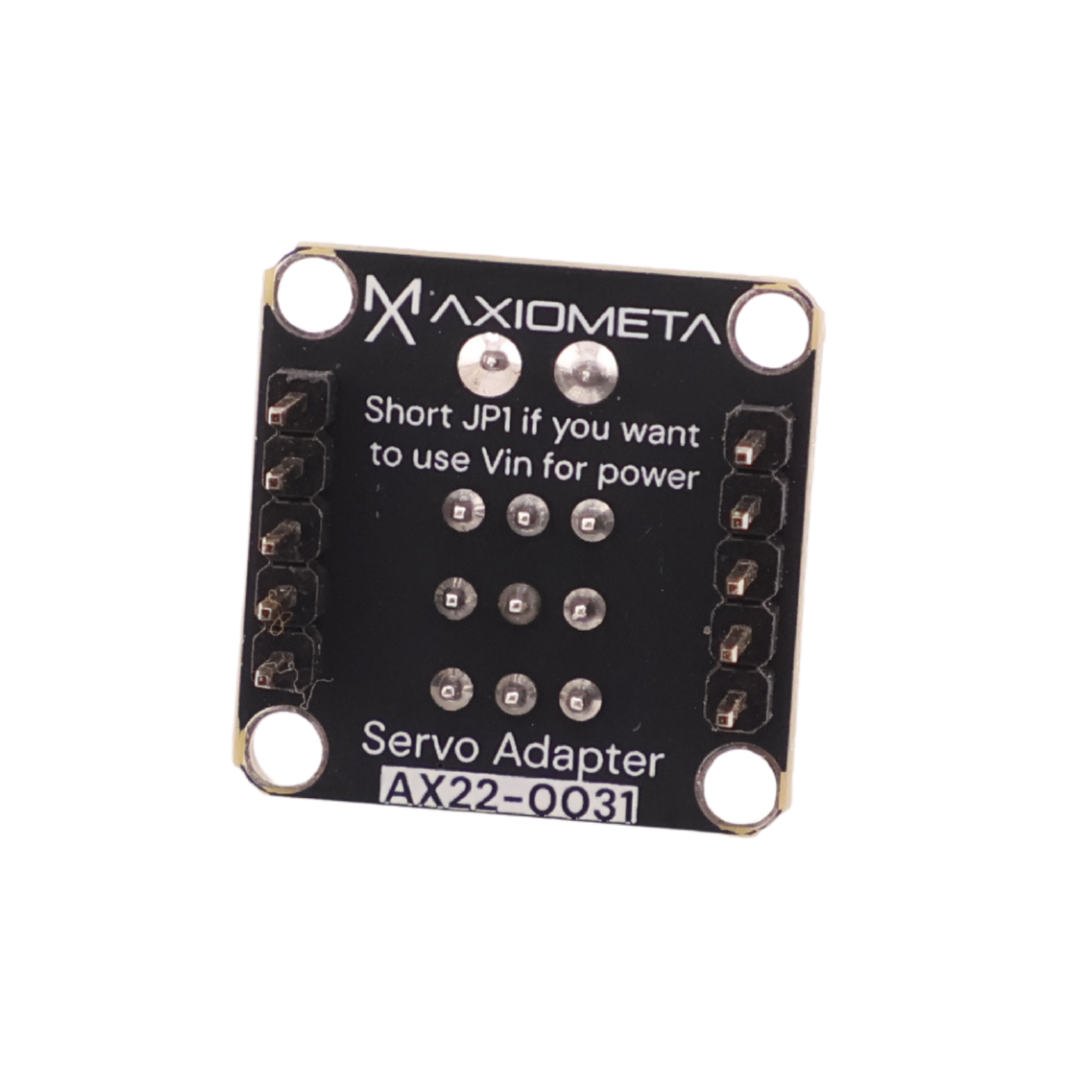
PCB BACK
🖱️ Click & drag to rotate
Arduino Example Snippet
#define SERVO1_PIN 1
#define SERVO2_PIN 14
#define SERVO3_PIN 41

#define SERVO_FREQ_HZ 50
#define PWM_BITS      12
#define PWM_MAX       ((1 << PWM_BITS) - 1)

// Typical servo pulse range (adjust if needed)
#define SERVO_MIN_US  500
#define SERVO_MAX_US  2500

static inline int clampi(int v, int lo, int hi) {
  if (v < lo) return lo;
  if (v > hi) return hi;
  return v;
}

static inline int angleToUs(int angle) {
  angle = clampi(angle, 0, 180);
  long us = SERVO_MIN_US + (long)(SERVO_MAX_US - SERVO_MIN_US) * angle / 180;
  return (int)us;
}

static inline int usToDuty(int us) {
  // 50 Hz -> period 20,000 us
  const int period_us = 1000000 / SERVO_FREQ_HZ; // 20000
  long duty = (long)us * PWM_MAX / period_us;
  return (int)clampi((int)duty, 0, PWM_MAX);
}

static inline void servoWriteAngle(int pin, int angle) {
  int us = angleToUs(angle);
  int duty = usToDuty(us);
  analogWrite(pin, duty);
}

void setup() {
  pinMode(SERVO1_PIN, OUTPUT);
  pinMode(SERVO2_PIN, OUTPUT);
  pinMode(SERVO3_PIN, OUTPUT);

  // IMPORTANT: core 3.3.5 requires pin argument
  analogWriteFrequency(SERVO1_PIN, SERVO_FREQ_HZ);
  analogWriteFrequency(SERVO2_PIN, SERVO_FREQ_HZ);
  analogWriteFrequency(SERVO3_PIN, SERVO_FREQ_HZ);

  analogWriteResolution(SERVO1_PIN, PWM_BITS);
  analogWriteResolution(SERVO2_PIN, PWM_BITS);
  analogWriteResolution(SERVO3_PIN, PWM_BITS);
}

void loop() {
  for (int a = 0; a <= 180; a++) {
    servoWriteAngle(SERVO1_PIN, a);
    servoWriteAngle(SERVO2_PIN, a);
    servoWriteAngle(SERVO3_PIN, a);
    delay(15);
  }

  for (int a = 180; a >= 0; a--) {
    servoWriteAngle(SERVO1_PIN, a);
    servoWriteAngle(SERVO2_PIN, a);
    servoWriteAngle(SERVO3_PIN, a);
    delay(15);
  }
}